While many homeowners may not initially prioritize the significance of bathroom countertops, it is vital to recognize their impact on both the functionality and aesthetics of this essential space. Countertops serve as a crucial component in creating a cohesive design that harmonizes with other elements within the room, while simultaneously providing a practical surface for daily grooming rituals. Therefore, investing time and effort into selecting an appropriate countertop material can greatly enhance the comfort and visual appeal of one’s bathroom sanctuary.
With the plethora of available options in today’s market, choosing an ideal countertop material may seem like a daunting task. However, by considering factors such as durability, maintenance requirements, personal style preferences, and budget constraints, homeowners can make informed decisions that cater to their unique needs.
This article aims to provide valuable insights into popular countertop materials such as granite, quartz and marble while also exploring alternative options for those seeking innovative solutions. By understanding the benefits and drawbacks of each option presented herein, readers will be better equipped to make educated choices when transforming their bathrooms into functional yet aesthetically pleasing spaces.
Key Takeaways
- Bathroom countertops impact both functionality and aesthetics, and factors to consider include durability, maintenance, personal style, budget, and environmental impact.
- Different countertop materials have unique characteristics, such as granite’s scratch and heat resistance, quartz’s non-porous and bacteria-resistant properties, and marble’s luxurious appearance that requires maintenance and care.
- Choosing the perfect material can enhance property value, but it’s important to understand that different materials require diverse cleaning techniques and product recommendations.
- Concrete countertops are a durable and versatile option that can be shaped, colored, and customized for creative expression. They can accommodate sinks and overhangs without compromising strength, and can significantly elevate the visual appeal of any bathroom space.
Explore our bathroom remodeling portfolio
Factors to Consider When Choosing a Countertop Material
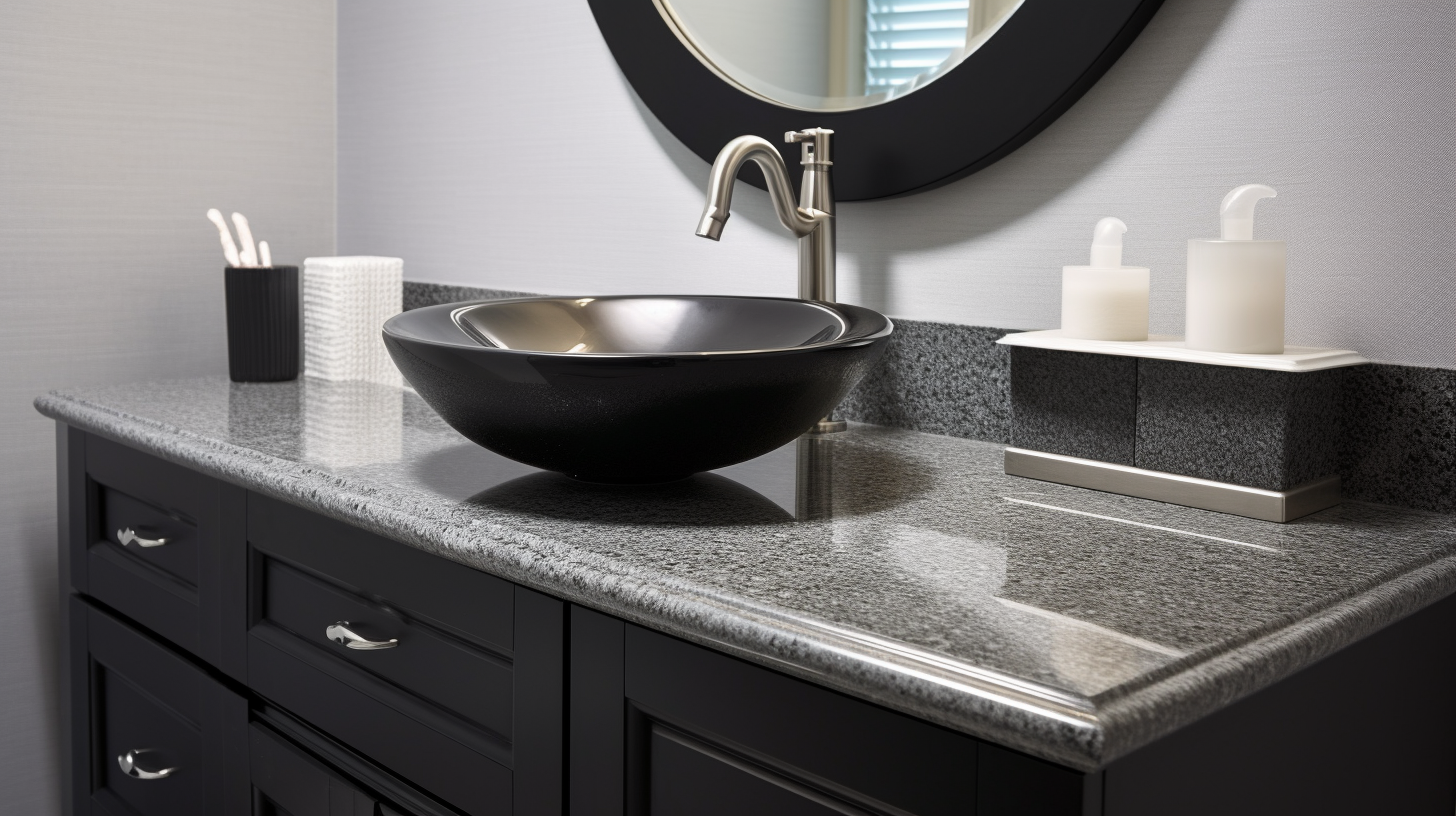
Evaluating the diverse array of factors, such as durability, aesthetics, maintenance requirements, and cost, is crucial when selecting the ideal countertop material for a bathroom that caters to both functionality and visual appeal. Durability factors should be given primary consideration as bathroom countertops are exposed to water, chemicals in cleaning products, and daily wear and tear.
Environmental impact is another significant aspect to consider when choosing a countertop material; selecting eco-friendly options contributes not only to the aesthetics but also supports sustainable living. Considering these vital aspects helps homeowners make informed choices about their bathroom countertops while ensuring they align with their personal style preferences.
In addition to these factors, it is essential to explore various materials available in the market that cater to different needs and budgets. One such popular option is granite countertops which offer an excellent balance between visual appeal and functionality. The following section delves into the advantages of using granite for your bathroom countertops while considering its unique characteristics and application possibilities.
Enhance Your Bathroom with the Right Mirror Choice
Granite Countertops

Granite countertops offer a durable, elegant, and practical solution for bathroom surfaces, providing both aesthetic appeal and long-lasting performance. Known for its Granite durability, this natural stone withstands daily wear and tear effortlessly while maintaining its striking appearance. Moreover, the Unique patterns found in granite slabs ensure that no two countertops are alike, allowing homeowners to showcase their individuality and taste.
- Natural Beauty: Granite is an igneous rock formed deep within the earth’s crust over millions of years. Its rich colors, intricate veins, and unique swirls lend a timeless elegance to any bathroom design.
- Durability: Resistant to scratches, stains, and heat damage, granite is one of the most resilient countertop materials available on the market.
- Ease of Maintenance: With proper sealing every few years, granite countertops require minimal upkeep to maintain their stunning appearance.
- Value-Adding Property Improvement: Investing in granite countertops can significantly enhance the overall value of your property while also offering unmatched style and functionality.
As you consider various options for your bathroom renovation project or new build design plan, be sure to explore another popular choice: quartz countertops – known for their unparalleled beauty and low-maintenance requirements.
Quartz Countertops

Quartz countertops, renowned for their exceptional beauty and minimal maintenance requirements, present a compelling alternative to granite for homeowners seeking a sophisticated and durable bathroom surface. Made from an engineered blend of natural quartz and resins, this material offers a level of Quartz durability that surpasses many other options on the market.
Moreover, it is non-porous, making it resistant to stains and bacteria—a critical feature in damp environments such as bathrooms. With a wide array of colors and patterns available, quartz countertops can easily complement any design aesthetic while delivering outstanding performance.
In addition to its remarkable durability and ease of care, quartz is also considered an eco-friendly choice for conscientious homeowners. Since it is comprised primarily of natural materials sourced responsibly from quarries around the world, the environmental impact associated with its production is significantly lower compared to other synthetic alternatives.
Furthermore, the long lifespan of quartz countertops ensures fewer replacements over time—ultimately contributing to less waste in landfills. For those seeking both style and sustainability in their bathroom design choices, quartz countertops provide an attractive solution that will stand the test of time.
The elegance of marble countertops awaits exploration as another enticing option for discerning homeowners.
Marble Countertops

Marble countertops, a luxurious and elegant option for bathrooms, present both advantages and disadvantages to consider. Delving into aspects such as maintenance and care requirements is essential in order to preserve the natural beauty of this porous material.
Furthermore, understanding the cost and installation process associated with marble countertops will enable homeowners to make informed decisions while balancing aesthetics and practicality.
Pros and Cons
Evaluating the advantages and disadvantages of various countertop materials, such as durability, maintenance, and aesthetics, is essential in selecting the perfect choice for one’s bathroom. Eco-friendly options are increasingly popular among homeowners seeking environmentally responsible choices for their homes. Material durability should also be considered to ensure that the countertop material can withstand daily use without showing signs of wear or damage.
| Advantages | Disadvantages | Eco-Friendly Options |
|---|---|---|
| Aesthetically pleasing | Can be expensive | Recycled glass |
| Wide variety of colors and patterns | May require regular sealing/maintenance | Reclaimed wood |
| Durable if properly cared for | Susceptible to stains/scratches with some stones | Engineered stone (low VOC) |
| Adds value to a home | Some materials may not be eco-friendly | _Bamboo |
Incorporating a detail-oriented approach when examining these factors will allow an individual to make an informed decision about their bathroom countertop material. By understanding both the positive aspects and potential drawbacks of each option, homeowners can balance aesthetic appeal with practical considerations like ease of maintenance. This comprehensive evaluation process will assist in making a confident selection that meets both personal preferences and functional needs while keeping innovation at the forefront. The subsequent section on ‘maintenance and care’ will provide further insights into preserving the beauty and longevity of your chosen countertop material.
Maintenance and Care
Preserving the pristine condition and enduring appeal of bathroom surfaces necessitates diligent maintenance and care, which encompasses regular cleaning, sealing when required, and addressing potential damage promptly.
Different countertop materials demand diverse cleaning techniques and product recommendations to maintain their aesthetic charm and functional quality.
For instance, natural stone countertops such as granite or marble require gentle cleaning with non-abrasive cleaners to avoid scratches, while periodically applying a sealer can help prevent stains.
Conversely, engineered quartz countertops are non-porous and do not need sealing; however, they benefit from routine cleaning using mild soap and water.
As one contemplates various countertop materials for their bathroom renovation project, it is imperative to consider factors such as maintenance requirements, durability, and susceptibility to damage from moisture or chemicals typically found in bathroom environments.
A well-maintained countertop not only enhances the visual appeal of the space but also contributes to its longevity and cost-effectiveness over time.
In conclusion, striking a balance between aesthetics, functionality, and ease of maintenance ensures that homeowners make an informed decision that suits their unique preferences while maximizing value for money invested in their renovation endeavors.
This comprehensive understanding will facilitate a seamless transition into evaluating cost implications and installation options for the ideal bathroom countertop material selection.
Cost and Installation
Delving into the financial aspect and practicalities of installation plays a crucial role in determining the most suitable option for bathroom countertops, as it enables homeowners to make well-informed decisions that align with their budget constraints and renovation goals.
Budget-friendly options such as laminate and tile provide an enticing alternative to more expensive materials like granite, marble, or quartz. These cost-effective choices offer a wide range of colors, patterns, and finishes that can easily adapt to various design preferences. Additionally, some of these materials are amenable to DIY installation, reducing labor costs associated with professional services.
When considering cost efficiency and ease of installation for bathroom countertop materials without compromising on style or durability, homeowners should be aware of innovative alternatives such as recycled glass or concrete countertops. These unconventional options not only deliver unique aesthetics but also boast sustainable properties that appeal to environmentally-conscious individuals.
Ultimately, identifying the ideal bathroom countertop material involves striking a balance between budgetary considerations and style preferences while taking into account factors like maintenance requirements and long-term durability. In doing so, one may explore alternative countertop materials which promise both functionality and visual allure.
Alternative Countertop Materials
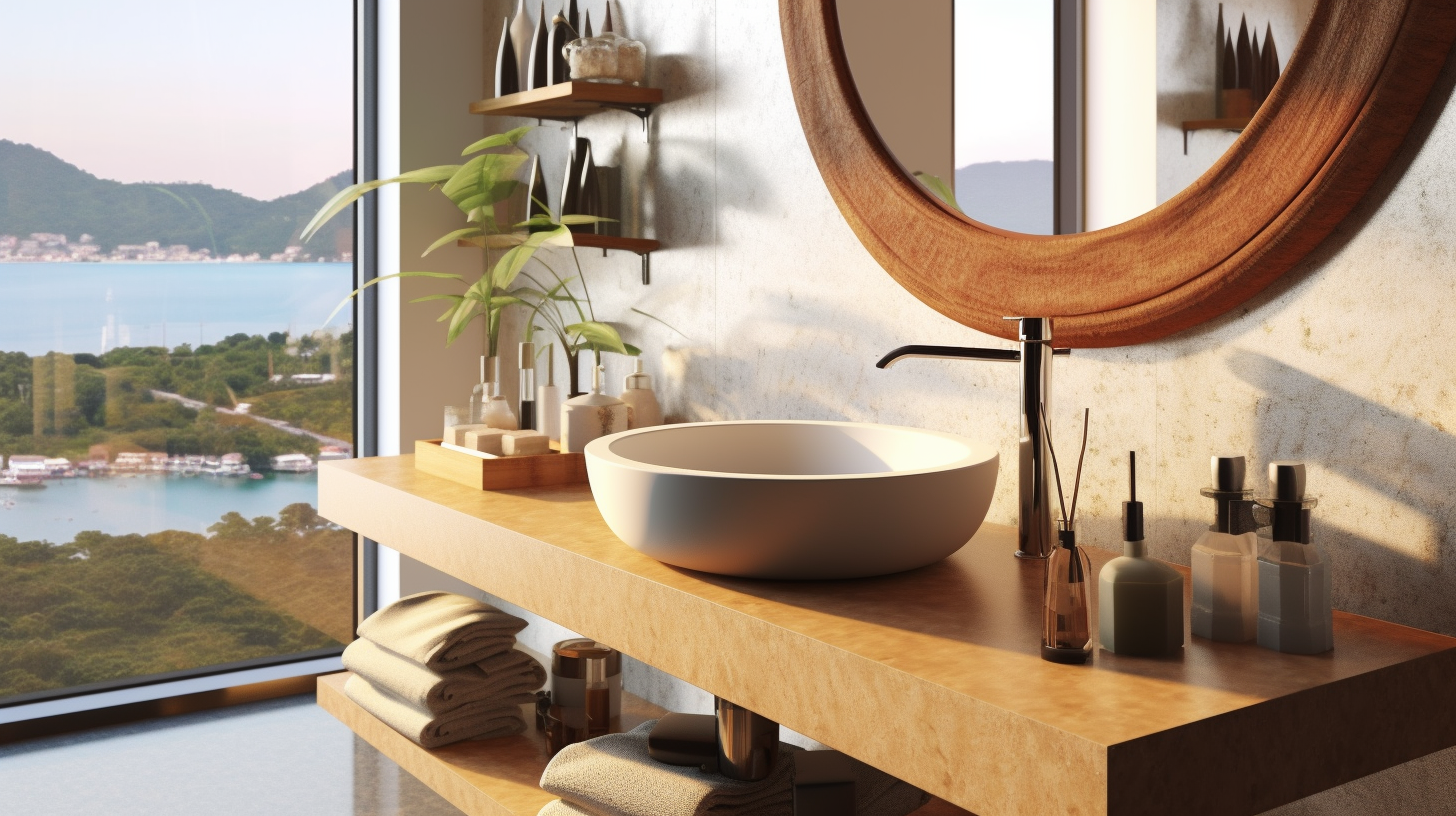
Exploring alternative countertop materials can offer homeowners a diverse range of options to suit their design preferences and budgetary constraints. Solid surface, laminate, tile, and concrete countertops each present unique aesthetic qualities and functional attributes that cater to various needs in a bathroom setting.
A thorough comparison of these materials will equip individuals with the necessary knowledge to make informed decisions when selecting the ideal countertop for their personal space.
Solid Surface
Examining the various options for bathroom countertops, solid surface materials emerge as a popular choice due to their seamless appearance, durability, and ease of maintenance. As an innovative solution for modern bathrooms, these non-porous surfaces offer both functionality and aesthetic appeal. Solid surface countertops are composed of acrylic or polyester resins combined with natural minerals, resulting in a material that is not only visually appealing but also highly resistant to stains, scratches, and impact damage. This advantageous combination contributes to the solid surface’s attractiveness as a bathroom countertop option.
Key features of solid surface countertops:
- Durability: Solid surface materials are known for their exceptional resistance to wear and tear.
- Design Versatility: Available in various colors and patterns, solid surfaces can be easily customized to suit individual tastes or blend seamlessly into existing bathroom designs.
Moreover, another benefit of choosing a solid surface countertop is its non-porous nature; this characteristic prevents bacteria growth and allows for simple cleaning with mild soap and water. Additionally, any minor damages such as scratches or burns can be easily repaired by sanding or buffing the affected area. Furthermore, design versatility enables homeowners to create unique looks by incorporating integrated sinks or backsplashes directly into the countertop itself – creating an uninterrupted flow between surfaces.
Given these advantages and the continued pursuit of innovation within interior design trends, it comes as no surprise that individuals seeking cutting-edge solutions find themselves drawn towards this material option. With its many benefits considered alongside alternative countertop materials like laminate – which will be explored further in the next section – solid surfaces provide a compelling case for their use in contemporary bathroom designs.
Laminate
Venturing into the realm of laminate countertops unveils an affordable and aesthetically versatile option for those seeking to strike a balance between practicality and style in their bathroom design.
Laminate trends have evolved over time, showcasing an impressive array of colors, textures, and patterns that can easily mimic more expensive materials such as marble, granite, or wood.
This material’s durability makes it a popular choice among homeowners who desire both visual appeal and functionality in their bathroom space.
Additionally, eco-friendly options are available for those looking to make environmentally-conscious decisions when selecting countertop materials.
The ease of maintenance associated with laminate countertops is another attractive feature for many individuals.
The non-porous surface inhibits bacterial growth and is resistant to stains, making it ideal for use in bathrooms where hygiene is paramount.
While not impervious to scratches or heat damage, careful use and regular cleaning can help maintain the longevity of this cost-effective material.
As consumers continue to seek innovative ways to personalize their living spaces while adhering to budgetary constraints, laminate countertops remain a viable contender in the world of bathroom design.
Exploring tile options presents yet another avenue for achieving unique aesthetics without compromising on quality or affordability.
Tile
Delving into the world of tile countertops reveals a myriad of possibilities for homeowners seeking both visual interest and practicality in their bathroom spaces. Tile offers an unmatched versatility in design, as it is available in a wide range of colors, patterns, sizes, shapes, and materials. This allows for endless customization options to fit any style preference or aesthetic vision.
Furthermore, tile durability is a notable factor when considering this countertop material – especially when opting for porcelain or ceramic tiles that are less prone to chipping and cracking. Additionally, tile presents eco-friendly options such as those made from recycled glass or natural stone which not only reduce environmental impact but also add unique texture and charm to the finished space.
When selecting the appropriate tile material for a bathroom countertop, it is essential to consider factors such as maintenance requirements and water resistance. Ceramic tiles have a glazed surface that resists staining and can be easily wiped clean with regular household cleaners; however, they may require resealing over time due to potential wear on the grout lines. Natural stone tiles such as granite and marble offer an elegant touch but often necessitate routine sealing to maintain their pristine appearance against moisture damage. On the other hand, non-porous materials like quartz or porcelain provide excellent stain resistance without demanding additional upkeep efforts.
Ultimately, understanding individual preferences alongside functional needs will ensure an informed decision on which type of tile creates an ideal balance between aesthetics and performance. As one explores further possibilities within countertop materials beyond laminate surfaces and traditional tiling techniques, concrete emerges as another striking option worth investigating in-depth.
Concrete
Exploring the realm of concrete countertops unveils a world of artistic expression and functional resilience for homeowners seeking a bold and distinctive statement in their bathroom spaces. As a countertop material, concrete is known for its inherent durability, versatile design capabilities, and compatibility with various design aesthetics. The ability to shape and color concrete allows for creative customization that can significantly elevate the visual appeal of any bathroom space.
- Concrete durability: Concrete countertops are made from a combination of cementitious materials, aggregates, and reinforcement fibers, resulting in an incredibly strong surface that can withstand daily wear-and-tear as well as resist scratches or chips.
- Creative customization: From integral sinks to embedded trivets or decorative inlays, concrete offers endless possibilities for personalizing one’s bathroom surfaces. Coupled with various finishing techniques like acid staining or polishing, homeowners can achieve unique textures and colors tailored to their individual taste.
- Versatility: Concrete’s compatibility with different styles makes it suitable for both traditional and contemporary bathrooms alike. Its adaptability also extends to accommodating undermount sinks or overhangs without compromising on strength or stability.
In conclusion, the use of concrete as a countertop material presents numerous benefits that range from its exceptional durability to opportunities for creative customization that cater to various design preferences. For those who desire an innovative bathroom space that combines form and function seamlessly while making a bold statement, exploring the potential of concrete countertops should be considered an essential step in their design journey.
Frequently Asked Questions
What are the environmental impacts of the various countertop materials and which options are the most eco-friendly?
Evaluating environmental impacts of various countertop materials involves assessing eco-friendly production methods and sustainable sourcing practices. Recycled glass, reclaimed wood, and bio-based resin composites offer innovative, environmentally responsible solutions for discerning consumers.
How do the different countertop materials react to water, humidity, and other bathroom-specific conditions?
An unparalleled water resistance comparison reveals that quartz, granite, and solid surface countertops triumph in humidity effects, showcasing resilience against bathroom-specific conditions while satiating innovative desires with aesthetic finesse.
Which countertop materials offer the best value for money, considering both initial costs and long-term maintenance expenses?
Durability comparison and budget considerations reveal that materials such as quartz, granite, and laminate offer optimal value for money, balancing initial costs with long-term maintenance expenses in innovative countertop solutions.
Are there any specific countertop materials that are better suited for small or uniquely shaped bathrooms?
Small bathroom solutions demand versatile materials; unique countertop shapes benefit from adaptable options. Engineered quartz and solid surface materials excel in customization, offering innovative aesthetics and detailed design possibilities.
What are the latest trends in bathroom countertop materials and designs, and how can they be incorporated into different bathroom styles?
Current trends in bathroom countertop materials and designs emphasize modern aesthetics and texture variety. Incorporating these elements into diverse bathroom styles enhances visual appeal, fulfilling the subconscious desire for innovation.
Conclusion
In conclusion, selecting an exceptional countertop material encompasses evaluating essential elements. These factors include durability, maintenance requirements, and aesthetic appeal.
By comprehending the characteristics of various materials such as granite, quartz, marble, and other alternatives, a wise decision can be made to ensure satisfaction with the bathroom’s design.
Careful consideration of countertop choices contributes to creating an alluring ambiance within one’s personal sanctuary. Deliberate decisions deliver delightful designs that not only prove practical but also provide a pleasing visual experience for years to come.
